1 Interview with Professor Umberto Cornelli
Professor Cornelli, what does your recent study tell us about microplastics in the human body?
“In our study1, published in Foods, we carried out a clinical investigation into the elimination of microplastics through the use of a natural fibre derived from Procambarus clarkii (PCC-chitosan). We analysed the presence of microplastics and bioplastics (particles smaller than 0.1 µm) in food and in the human body. We detected traces in blood, the liver, the brain and the endocrine system, suggesting possible negative effects on both the immune and hormonal systems.”
Is there scientific evidence of their presence in other parts of the body?
“A previous Italian study2, published in 2024 in the New England Journal of Medicine, identified microplastics in carotid plaques in more than 50% of cases, linking them to a risk of heart attack, stroke or death nearly five times higher over a three-year period.”
What are the implications for everyday health?
“Microplastics accumulate in human tissue, triggering chronic inflammation, oxidative stress and potential neuroendocrine damage. The concept of inner ecology is therefore particularly relevant; these are no longer distant phenomena, but ones that affect our physiological balance.”
You also write about a natural fibre – how does it work?
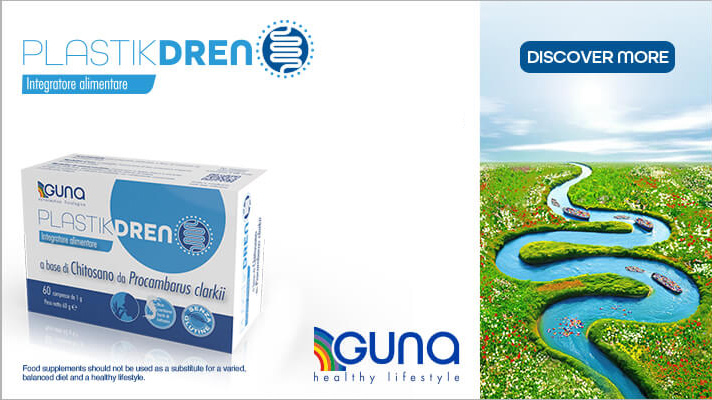
“We observed a 45% increase in microplastics expelled in faeces after a single administration of 0.8 g of PCC-chitosan, compared with the control group. Furthermore, the effect was selective: the chitosan bound mainly to synthetic fibres such as rayon, PET, PP and polyethylene, also altering the shape and size of the particles eliminated.”
How, then, is the approach you recommend structured?
“A twofold strategy is needed:
- Limit intake: Reduce plastic in food, packaging, water and air (indoor pollution).
- Promote elimination: Support natural purification through a fibre-rich diet, physical activity and healthy everyday habits.
Talking about inner ecology today means recognising that the external environment is mirrored within our own bodies – we breathe in and ingest plastic every day. A number of particles become trapped in tissues, in the gut, and even in the brain. The idea is that we must focus not only on environmental but also personal detoxification. And, above all, on prevention.
Of course, broader studies are needed to determine optimal doses, timing and long-term benefits. These results, however, open the door for the first time to the real possibility of taking proactive action against the accumulation of microplastics in the body.”