1 Professor cornelli, you are considered the leading expert on chitosan. Why have you studied this subject your whole life?
Because it is a natural cationic fibre and therefore unique in its kind, and it is the most common fibre found in the animal kingdom. Just as cellulose is the most important polymer in the plant kingdom, chitosan – which is a derivative of chitin – is the most important cationic fibre in existence, with two fundamental characteristics: it can form ionic bonds and it can form hydrogen bonds. The number of such bonds is extremely high, which is why it is important: it is well suited to the animal kingdom and to humans.
2 Microplastics and chitosan from procambarus clarkii. What is the relationship between these two worlds, and why is the topic so relevant?
If we start from the relationship between these two worlds, it is now well established that chitosan from Procambarus clarkii acts rather like a magnet for microplastics. This is because it is able to bind them both through ionic bonds and, much more efficiently, through so-called hydrogen bonds. However, I should explain the strength of a hydrogen bond. Its strength lies in their number, but let me give a very simple example: A gecko that walks up a wall does so thanks to hydrogen bonds.
3 Professor, what is the current state of scientific research on this topic?
Let’s say that we are the first to have identified the possibility of binding microplastics in the gastrointestinal tract and having them eliminated through faeces. Everyone else is trying, but they are not using natural fibres. They sometimes use mixtures of products that make little sense and are at best aimed at reducing the oxidative stress generated by microplastics, but they do not lead to the elimination of microplastics.
4 And in this regard, professor, is there a natural solution for eliminating microplastics from the human body?
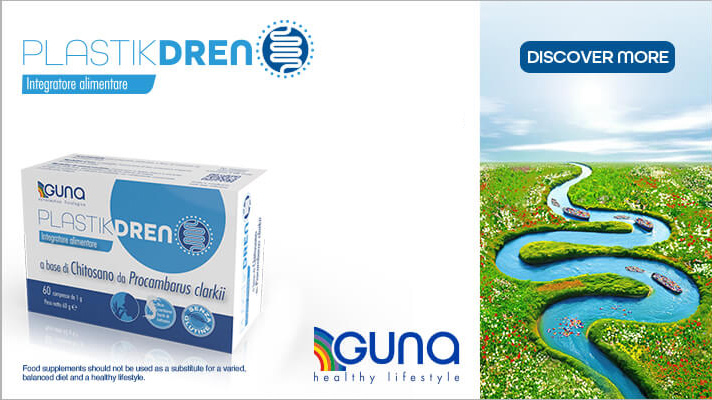
Yes. We have studied a natural food supplement derived from Procambarus clarkii, called PlastikDren, which has shown to be able to increase the faecal excretion of microplastics ingested with food.1
5 So, professor, in conclusion, what strategy do you recommend for eliminating microplastics?
First of all, limiting the intake of microplastics present in the environment and consequently reducing the use of plastic bottles for water, cooking in heat-resistant containers, and the use of single-use foods bought in supermarkets that come in plastic packaging; the use of synthetic fibres in towels, bed linen, and so on… all of this increases contact with microplastics. The other thing that should be done is to limit the oral intake of certain foods, such as small fish, and then try to increase the elimination of microplastics by using a food supplement that increases their faecal excretion by binding them and facilitating their elimination.