1 A pioneer who listens to the body
Professor Umberto Cornelli is not just a scientist. He is one of those researchers who, rather than limit himself to measuring data, looks for actual signals. Signals that come from the human body, now increasingly contaminated by what surrounds us: microplastics, chemicals, environmental stress.
His career, which began in the field of pharmacology and has been enriched by decades of clinical research, has led him to a new meeting point between medicine and sustainability – what he himself calls “inner ecology.”
2 Microplastics are no longer just an external risk
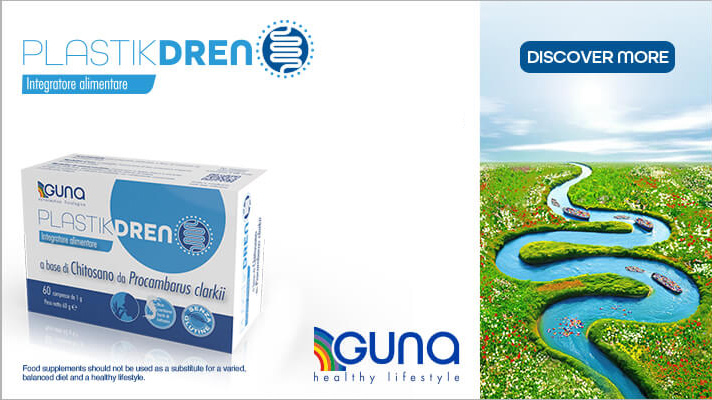
In 2025, Professor Cornelli authored a study1 published in Foods that attracted considerable attention: an analysis of the presence of microplastics and nanoplastics in healthy individuals, and the possibility of promoting their elimination through a natural fibre derived from Procambarus clarkii (PCC-chitosan).
But more than the results themselves, it is the overall picture that carries transformative value: microplastics are not a distant threat, but a bodily reality.
They have been detected in the blood, liver, brain and endocrine tissues. An earlier study2 had in fact already identified them in atherosclerotic plaques, linked to a significant increase in heart attacks and strokes.
3 The body as a place of contamination (and healing)
Faced with this evidence, Professor Cornelli’s position is clear: we must rethink the very concept of health. The human body has become an environmental sentinel – it retains, records and suffers what happens outside.
Ecology, therefore, is not only about recycling or emissions: it is a matter of physiological balance. This is where the idea of inner ecology takes shape – a medicine that observes the inside to understand the outside. A form of prevention not based on urgency, but on the ability to read the signs.
4 A fibre, a signal
Among the study’s most interesting findings is the effect observed following the administration of Procambarus clarkii chitosan (PCC-chitosan): after only 24 hours, the excretion of microplastics increased by 45%. Not only that – the expelled particles were found to be altered in shape and selectively bound to synthetic fibres such as PET and polyethylene.
This is not merely a technical finding. It is tangible evidence that the body can be supported in eliminating its toxic load – that there exists a natural, compatible way to enhance its internal mechanisms
As Professor Cornelli explains: “The elimination or reduction of microplastics ingested with food ‘cools down’ the inflammatory processes they cause in all organs and prevents the progression of lesions by isolating them.”
This minimises damage to organs, allowing them to maintain their function.
5 Physiological nutraceutics and ecological prevention
From here arises a new approach, which Professor Cornelli summarises in two key concepts:
- Ecological prevention: reducing what enters the body (plastics, toxins, disruptors) and promoting what leaves it (through fibre intake, lifestyle, breathing, movement).
- Physiological nutraceutics: using natural substances that work in synergy with the body – not forcing it, but supporting it. A gentle, daily, intelligent form of support.
6 A medicine that looks ahead
Professor Cornelli’s work shows us that the human body is not merely the object of medicine, but a living environment. It is an open system, permeated by the ecosystem around us.
At a time when pollution has become invisible, acting from within is a revolutionary choice. Because prevention today also means cleansing, listening and detoxifying.
7 The message is clear: health is environmental.
In an age when pollution is invisible and global, the only territory we can truly control is our own body. And protecting it means also protecting the planet. Professor Cornelli emphasises this with conviction: “If we fail to detoxify the inside, it will be impossible to save the outside.”